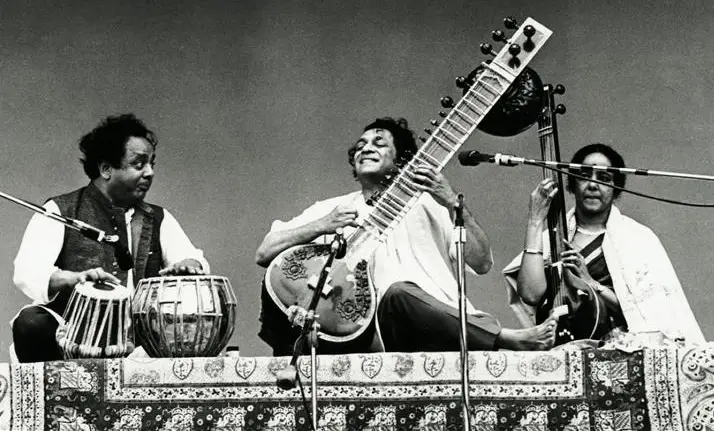
The History of Indian Classical Music
If you are in any way associated with music or simply a music lover, you’re likely familiar with Indian classical music, right? But do you know how it originated and evolved? Let’s take a look. India is filled with rich heritage and abundance of history. Right from the architectural grandeur of South India to the sculptural wonders of North India, both of these diverse parts of our country have their own unique stories to tell. However, our intense diversity in cultural aspects has found a common ground- Indian Classical Music. Throughout our history, classical music has been an essential part of our culture, resonating with everyone who has continued to identify with every rhythmic beat. As our country evolved, classical music has evolved with it. In this blog, we’ll explore the impact of the rich heritage of Indian classical music and how it has evolved over time. The Beginning of Indian Classical Music The origins of Indian classical music can be traced back to the sacred Vedic scriptures of over 6,000 years ago, which established a foundation for musical notes and rhythmic structures. From the beginning, Indian classical music has been very closely connected to nature. Its inspiration comes from the natural phenomena, such as the seasons and times of the day that created ragas or musical moods and cycles or ‘taals’ that have been further codified. Indian classical music’s compositions are fixed but most of the music is improvised within the structure of notes and mathematics, making each performance extremely unique. In the Indian classical music tradition, the knowledge and skills are passed down verbally from a teacher or ‘guru’ to a student over many years. This process involves the creation of a unique, spiritual bond between the teacher and the student, along with imbibing all aspects of the music. Although nowadays, Indian classical music can be learned in many institutions and has been heavily documented, learning through observation, listening, and memory is still important. Evolution of Indian Classical Music Indian classical music has a rich and fascinating history, its evolution a testament to its constant blend between tradition, innovation, and external influences. Let’s take a look at how it has evolved throughout the time. The earliest seeds of Indian music are found in the sacred chants of the Vedas (1000 BCE — 500 CE). The Samaveda featured the melodic recitation of hymns, laying the foundation for the concept of “swara” (musical notes). The 2nd-3rd century CE Sanskrit text “Natya Shastra” by Bharata Muni established the theoretical framework for music, including the concept of “raga” (melodic mode) and “tala” (rhythmic cycle). By the 500 CE to 1500 CE era, regional influences led to distinct styles across India. Temple music traditions thrived in South India, while North India witnessed influences from Persian and Central Asian music. This period also saw the crystallization of the two main streams of Indian classical music: Hindustani in the north and Carnatic in the south. The Mughal period (1500 CE — 1800 CE) witnessed a fascinating exchange of ideas between Indian and Persian musical traditions. Mughal emperors, patrons of the arts, fostered a flourishing musical environment with renowned musicians like Tansen and Baiju Bawra composing masterpieces. The colonial era (1800 CE — Present) saw efforts to codify and document Indian classical music traditions. The 19th century witnessed a revival of interest, with institutions dedicated to preserving and teaching this art form being established. In the 20th and 21st centuries, Indian classical music has embraced new avenues. Musicians are experimenting with fusion genres, incorporating electronic elements, and collaborating with artists from other traditions, keeping the art form vibrant and relevant for contemporary audiences. The evolution of Indian classical music continues to captivate listeners with its intricate melodies, complex rhythms, and profound emotional depth. As it continues to evolve, one thing remains constant: its power to connect us to our rich heritage and evoke timeless emotions.
The History of Indian Classical Music Read More »